
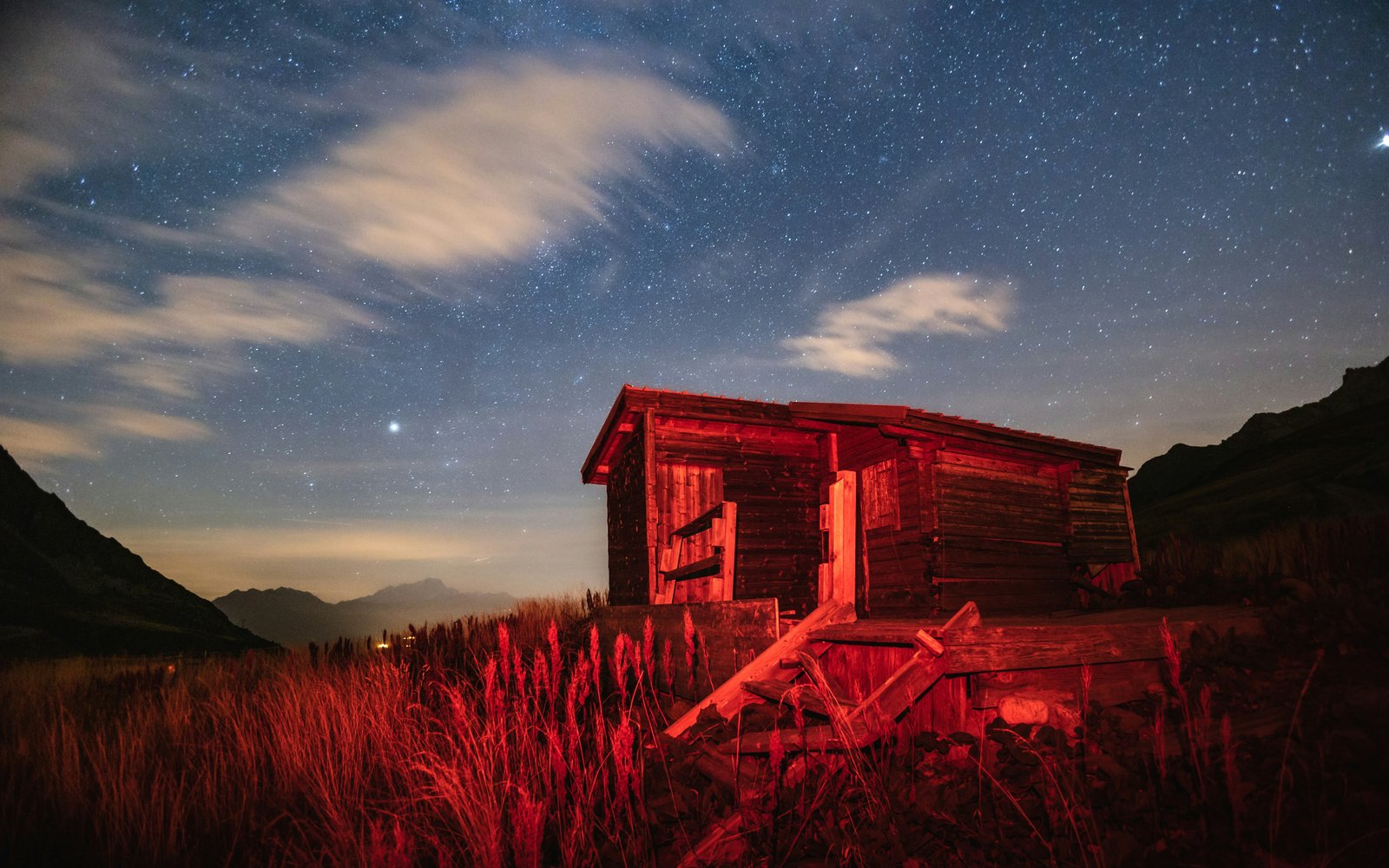
Why winter is often best
The darkest nights in the UK occur during autumn and winter when sunset happens earlier and the hours of darkness are longer.
These longer nights give stargazers more opportunity to explore the sky, making the period from October to March especially popular for dark sky trips.
Winter skies can also feel clearer because cold air often contains less moisture, reducing haze that can affect visibility.
When can you see the Milky Way in the UK?
The Milky Way is visible throughout much of the year, but the brightest part of the galaxy is easiest to see during spring, summer and early autumn.
Between June and September, the Milky Way core rises higher in the evening sky, creating some of the most impressive views available from dark locations.
For the best experience, combine a dark sky location with a moonless night and minimal cloud cover.
Stargazing by season
Autumn
September – November
A favourite time for many stargazers. Nights become longer, temperatures remain comfortable and the skies begin to darken earlier.
Winter
December – February
The darkest months of the year with some of the longest viewing windows. Excellent for constellation watching and deep-sky astronomy.
Summer
June – August
Shorter nights, but the Milky Way core becomes a spectacular feature of rural dark skies.
Meteor showers and astronomy events
Planning around major astronomical events can make a dark sky stay even more memorable.
Some of the most popular annual events visible from the UK include:
- Perseid meteor shower — August
- Geminid meteor shower — December
- Orionid meteor shower — October
- Lunar eclipses and planetary events throughout the year
The perfect stargazing conditions
The best night is not simply about the date. Successful stargazing depends on several factors working together:
- Dark skies away from artificial lighting
- Clear weather and low cloud cover
- A new moon or minimal moonlight
- A location with open views of the sky
Choosing the right dark sky stay
At Starnook, we focus on finding places where the darkness itself is part of the experience.
Every stay is assessed using dark sky measurements alongside practical details such as privacy, surrounding lighting and how easily guests can enjoy the stars from their accommodation.